
El Gran Incendio de Chicago, y la vaca que no lo causó
In two days in October 1871, fire burned through the heart of the city. The famous cow was cleared in 1997.
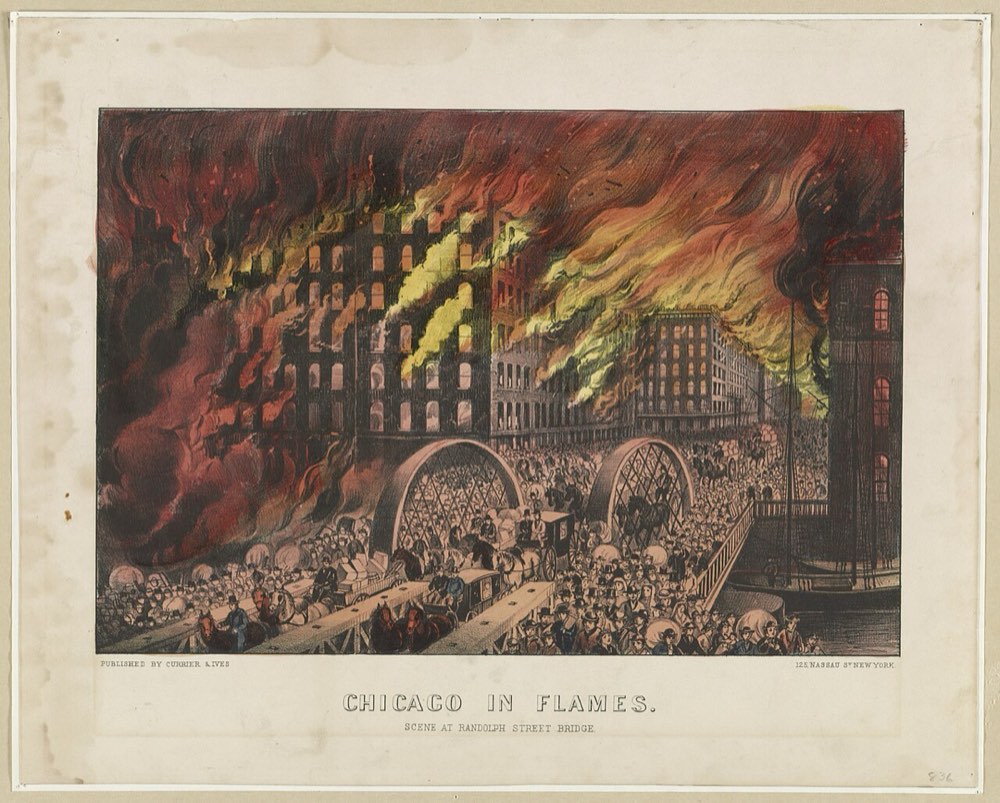
On the evening of Oct. 8, 1871, a fire started in a barn behind the home of Patrick and Catherine O'Leary at 137 De Koven Street, and burned until firefighters brought it under control on Oct. 10.
The U.S. Census Bureau puts the damage at more than 2,000 acres of homes and businesses and more than 17,500 buildings. National Geographic describes a burned area about 4 miles long and a mile wide. As many as 300 people are believed to have died, although only about 120 bodies were recovered. Sources put the number left homeless at about 90,000 to 100,000, roughly one in three Chicagoans.
A few structures came through. The Water Tower and its Pumping Station, finished in 1869 to a design by W. W. Boyington, are the only public buildings that survived in the burned area, according to the city's landmarks office. The Chicago Architecture Center notes it is a myth that the tower was the only building left standing.
Then there is the cow. A newspaper of the time blamed a cow kicking over a lamp, and the story stuck. But the Fire Department's own inquiry in 1871 found the cause could not be determined. On Oct. 6, 1997, the City Council passed a resolution to exonerate Mrs. O'Leary and her cow.
- U.S. Census Bureau, "The Great Chicago Fire" (October 2021)
- National Geographic Education, "Chicago Fire of 1871 and the Great Rebuilding"
- City of Chicago, Landmarks: Old Chicago Water Tower District
Recibe Chicago en tu correo
Tu barrio, cinco historias y el clima, cada día entre semana a las 6 a.m. Gratis. Cancela tu suscripción con un clic, cuando quieras.